

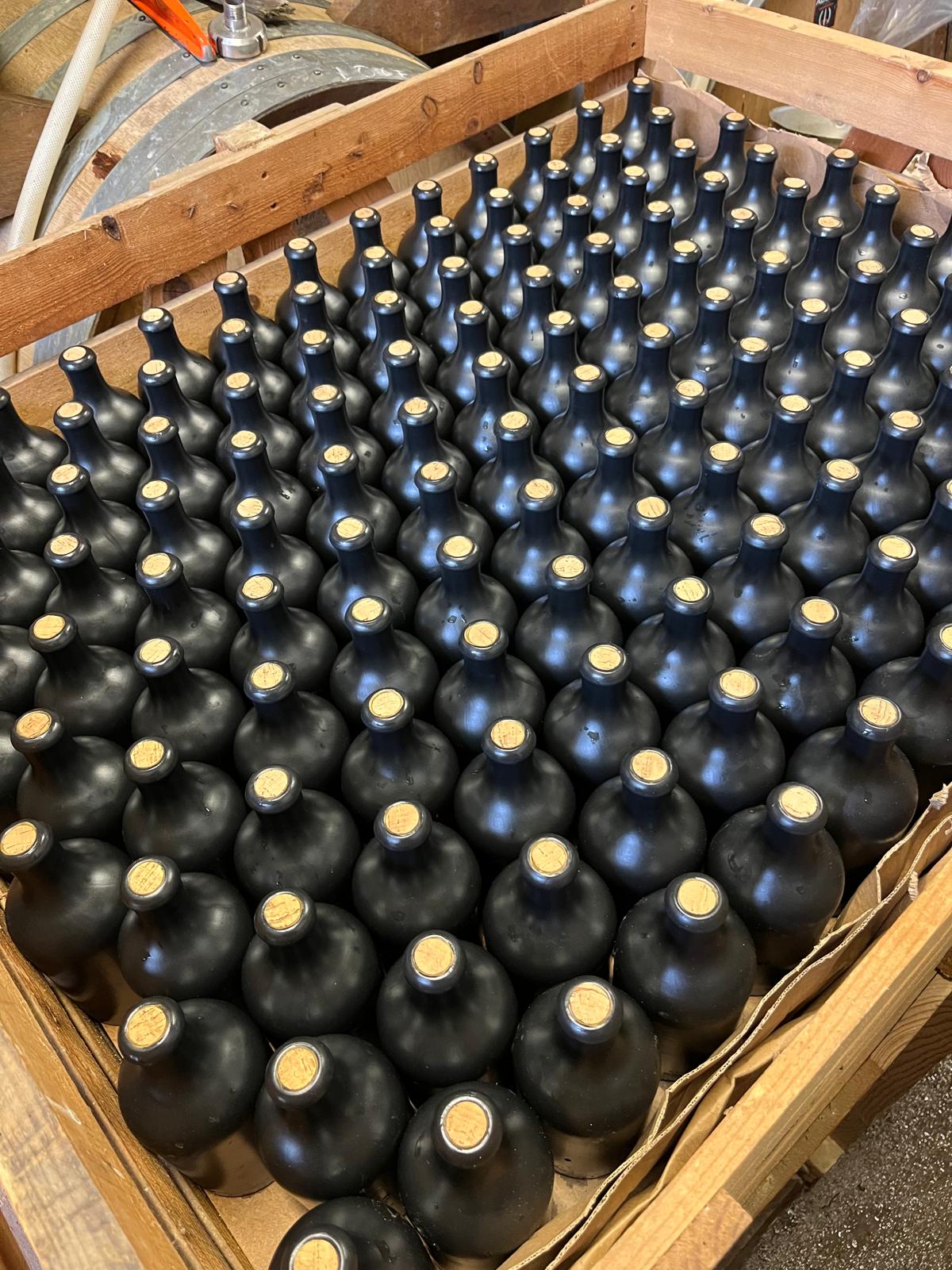
In the world of fine wine and premium wines, every detail matters.
The container is an extension of our work: the label, of course, and the bottle itself.
While glass has been the standard for centuries, with its first appearances in Europe in the Middle Ages and wider adoption during the Renaissance, another type of container is now making a comeback: the stoneware bottle.
A direct link with History and cellar practices
The choice of stoneware is far from anecdotal. This material, made from clay and silica, has long been used in olive oil production and is now attracting more and more winemakers.
Its use naturally evokes ageing in amphorae or jars, ancestral methods that are currently experiencing a strong revival. It is also a nod to the history of wine itself, since long before glass, wines were transported and stored in ceramic vessels.
Technical adjustments
Switching to stoneware requires a few technical adaptations, mainly due to different bottle formats, including shorter necks and the opaque nature of the material, which require specific settings on bottling lines.
These technical constraints are largely offset by the benefits stoneware brings to wine preservation, especially for natural white wines.
Benefits for wine preservation and quality
Stoneware offers superior thermal inertia compared to glass, limiting temperature fluctuations during transport and storage. It also protects wine from light, which is a major advantage, as prolonged light exposure can significantly alter aromas and flavour.
From a production standpoint, the manufacturing process of stoneware is less energy-intensive than glass, reinforcing its ecological appeal. It is therefore a natural companion for organic and natural wines.
Two useful formats for wine : 50cl and 75cl
The 50 cl format is ideal for those who want a smaller portion to share between two people, or as an original alternative to standard bottle sizes.
The 75 cl format, more traditional, remains perfect for table wines and tastings. It pairs particularly well with the spirit of natural red wine: robust, vibrant and full of character.
Beyond their capacity, these bottles have an organic and handcrafted aesthetic that supports a coherent visual identity for brands promoting an authentic and sincere approach to wine, while remaining practical for serving and storage.
An object that lives beyond the tasting
A stoneware bottle does not necessarily end its life in the bin. It can be reused as a carafe, a decorative vase or a candle holder. And for bottles that do not find a second domestic life, stoneware is recyclable in the construction sector, for example as filling material or for landscaping purposes.
In summary
Stoneware bottles combine revived tradition, technical performance and environmental value. They do more than simply contain wine: they extend the tasting experience, enhance perceived quality and tell a story that goes far beyond the moment the bottle is opened.